Biofouling, the accumulation of marine organisms on submerged surfaces, poses significant challenges, increasing fuel consumption, maintenance costs, and environmental impact. Traditional antifouling methods, such as toxic copper-based paints, are being replaced by eco-friendly nanocoatings.
What Are Nanocoatings? Nanocoatings are ultrathin, nanoscale protective layers with properties like hydrophobicity, antimicrobial activity, and durability. They prevent biofouling by creating surfaces resistant to organism adhesion.
How Nanocoatings Work
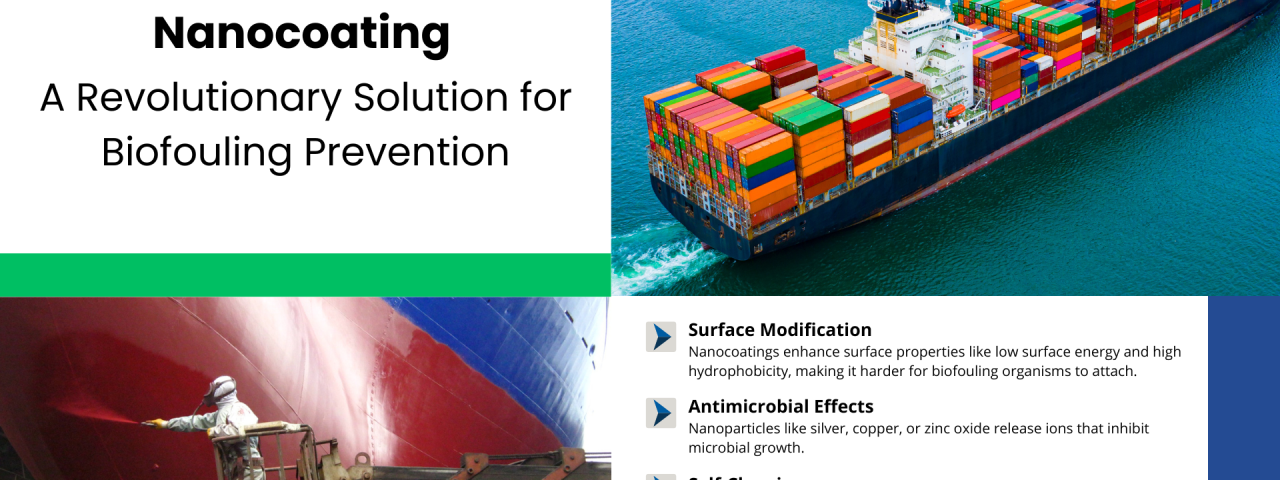
- Surface Modification: Hydrophobic and low-friction surfaces reduce biofilm adhesion.
- Antimicrobial Activity: Nanoparticles (e.g., silver, TiO₂, ZnO) release ions that disrupt microbial growth.
- Self-Cleaning: Inspired by natural designs, such as lotus leaves, they repel water and debris.
- Durability: Enhanced resistance to saltwater and abrasion ensures long-term performance.
Recent Advancements in Nanocoatings (2023-2024)
- Eco-Friendly Formulations: Biocide-free composites using carbon nanotubes and graphene align with global environmental standards.
- Metal Oxide Innovations: TiO₂ nanoparticles kill microorganisms via photocatalysis without environmental harm.
- Biomimetic Designs: Shark skin-inspired nanocoatings offer superhydrophobic and drag-reducing properties.
- Durable Hybrids: Graphene oxide and polymers improve longevity and mechanical strength.
Benefits Nanocoatings offer sustainability, reduced costs, improved hydrodynamics, and exceptional durability.
Challenges Scaling production and regulatory approvals remain hurdles. Future innovations may combine nanotechnology with AI for predictive maintenance.
Conclusion Nanocoatings promise a sustainable future for biofouling prevention, offering durable, efficient, and environmentally friendly alternatives to traditional methods. As industries embrace greener solutions, nanocoatings are set to redefine marine standards.