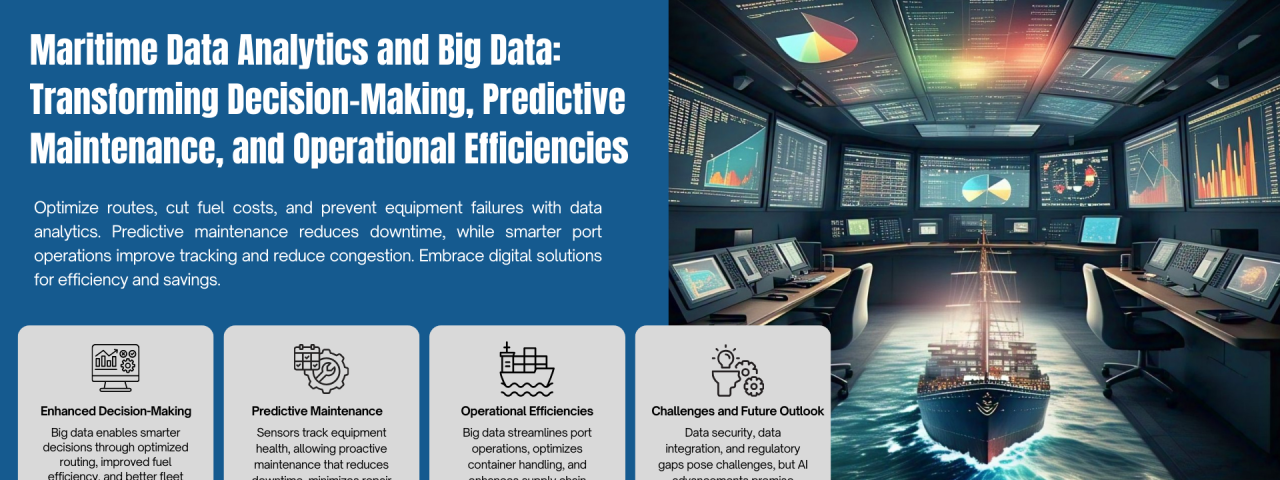
The maritime industry is embracing big data and data analytics to revolutionize decision-making, predictive maintenance, and operational efficiencies. By leveraging vast data from ships, ports, and supply chains, maritime businesses can enhance performance, reduce costs, and improve safety.
Big Data in the Maritime Industry: The Building Blocks
Big data in maritime stems from various sources, including:
- Vessel Sensors and IoT Devices: Sensors track engine performance, fuel use, weather, and cargo load.
- Port Operations: Data on berth schedules, container movements, and customs processes improves efficiency.
- Shipping Routes and Weather Data: Predictive analytics optimizes travel paths, reducing delays and improving safety.
- Supply Chain and Logistics Data: Real-time data helps forecast demand and manage inventory.
By analyzing this data, maritime businesses gain insights that drive better decision-making, predictive maintenance, and automation.
Data-Driven Decision Making: Enhancing Strategies
Big data enhances decision-making in areas such as:
- Optimized Routing and Fuel Efficiency: Real-time data on weather, currents, and engine performance enables optimized travel paths, reducing fuel consumption and delays. Machine learning models predict ideal routes for improved efficiency.
- Fleet Management and Performance Monitoring: Big data tracks metrics like speed, engine health, and cargo loads across fleets. Predictive models help identify potential issues before they disrupt operations.
Predictive Maintenance: Proactive Repairs
Predictive maintenance reduces downtime and repair costs by analyzing sensor data to forecast equipment failures.
- Monitoring Equipment Health: Sensors on engines, pumps, and electrical systems detect irregularities like overheating or vibrations. Predictive algorithms alert maintenance teams to address issues before breakdowns occur.
- Minimizing Downtime and Cost: Predictive maintenance enables targeted repairs based on wear and tear, improving resource allocation and reducing unnecessary maintenance.
Operational Efficiencies: Streamlining Processes
Big data optimizes maritime processes such as:
- Port and Terminal Optimization: Real-time tracking helps minimize congestion, improve berth management, and streamline container handling.
- Supply Chain Integration and Demand Forecasting: Analyzing logistics data optimizes shipping schedules, capacity planning, and demand forecasting, improving delivery timelines and reducing costs.
Challenges and the Road Ahead
Despite its advantages, big data adoption in maritime faces challenges:
- Data Security: Increased IoT usage heightens cybersecurity risks.
- Data Integration: Ensuring data accuracy and compatibility across platforms remains a technical challenge.
- Regulation and Standardization: The maritime sector lacks uniform data standards, limiting seamless integration.
Conclusion
Big data is transforming the maritime industry by enabling informed decisions, predictive maintenance, and operational efficiencies. As digital transformation advances, data analytics will play an even greater role in improving global trade, reducing costs, and enhancing sustainability. The maritime industry stands poised for a smarter, safer, and more efficient future driven by data innovation.