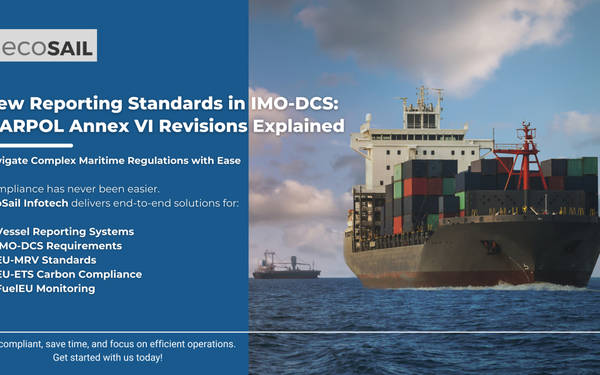
The International Maritime Organization (IMO) has introduced important amendments to MARPOL Annex VI, underscoring its dedication to reducing environmental pollution from maritime activities. These updates, aimed at enhancing control over nitrogen oxide (NOx) and sulphur oxides (SOx) emissions, represent a constructive step forward for the global shipping industry. With new designations for Emission Control Areas (ECAs), the maritime sector is set to adopt cleaner and more sustainable practices.
NOx Emission Control Areas: Norwegian Sea and Canadian Arctic
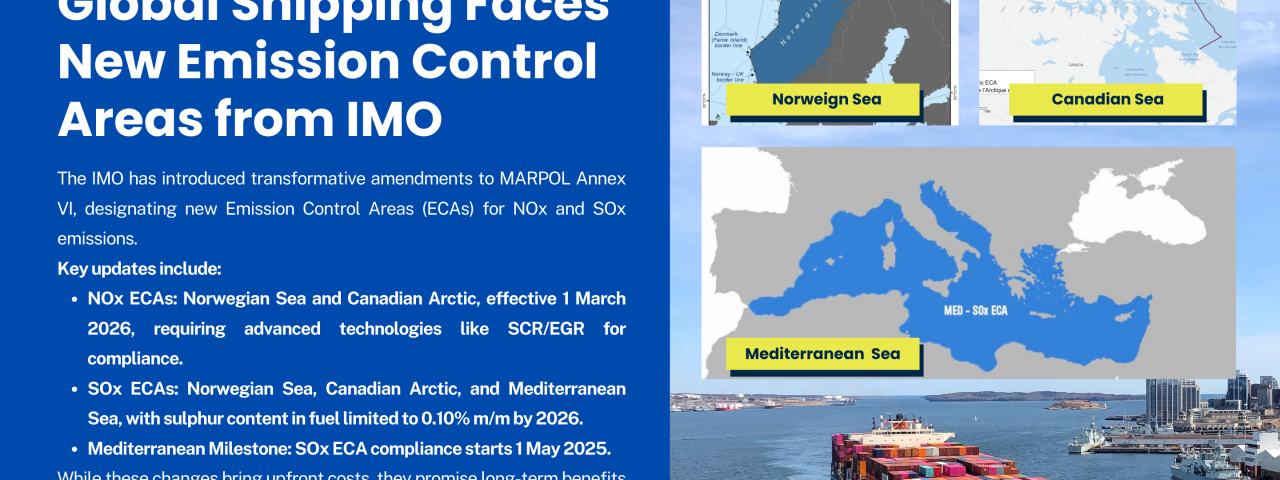
In an ambitious step to address air pollution, IMO Resolution MEPC.392(82) designates the Norwegian Sea and Canadian Arctic as NOx Emission Control Areas. Effective 1 March 2026, these regions will see stricter controls on NOx emissions, compelling ship operators to upgrade their fleets and adopt more environmentally friendly technologies. The effects will be
- Added cost in using the compliant fuel MGO
- More reason to install EGCS for Sox compliance.
- Additional cost for vessels having Tier III engines for the operation of SCR/EGR in new NOx control areas.
Compliance Requirements for the Norwegian Sea
The resolution sets a phased compliance timeline for vessels operating in the Norwegian Sea:
- New Building Contracts: Ships with building contracts signed on or after 1 March 2026 must comply with Tier III NOx emission standards.
- Keel Laying Date: For ships without a building contract, compliance applies to vessels with keels laid on or after 1 September 2026.
- Delivery Date: Ships delivered from 1 March 2030 must adhere to these standards.
Canadian Arctic Compliance Timeline
The Canadian Arctic region is also included as a NOx ECA with its specific requirements:
- To operate in this area, vessels with keels laid on or after 1 January 2025 must meet Tier III NOx emission standards.
The introduction of these NOx ECAs underscores the IMO's resolve to address air quality issues in sensitive Arctic and sub-Arctic regions, where emissions have a particularly severe impact.
SOx Emission Control Areas: Norwegian Sea and Canadian Arctic
In addition to controlling NOx emissions, the IMO has designated the Norwegian Sea and Canadian Arctic as SOx Emission Control Areas, also under Resolution MEPC.392(82). Ships operating in these regions must use fuel oil with a sulphur content of no more than 0.10% m/m, starting 1 March 2026.
This measure aims to significantly reduce sulphur emissions, which contribute to acid rain and pose risks to marine ecosystems and human health. By lowering permissible sulphur content, the IMO seeks to foster cleaner air and healthier environments in these ecologically sensitive areas.
Mediterranean Sea SOx ECA: A Landmark Initiative
The Mediterranean Sea, one of the world’s most trafficked waterways, has also been designated a SOx ECA. IMO Resolution MEPC.361(79) outlines a clear compliance timeline:
- The amendment officially came into force on 1 May 2024.
- From 1 May 2025, ships operating in the Mediterranean Sea must limit fuel oil sulphur content to 0.10% m/m.
This initiative represents a significant milestone for the Mediterranean region, where high shipping traffic has historically contributed to substantial air pollution. By enforcing stricter sulphur emission controls, the IMO aims to protect the unique biodiversity of this iconic maritime zone while improving air quality for millions living in coastal areas.
Impacts on the Maritime Industry
The IMO's new ECA designations and emission standards will have far-reaching implications for ship operators and the broader maritime industry.
Technological Upgrades
Meeting Tier III NOx standards will require adopting advanced technologies such as selective catalytic reduction (SCR) systems and exhaust gas recirculation (EGR) systems. For SOx compliance, shipowners may need to switch to low-sulphur fuels, install scrubbers, or explore alternative fuels such as MGO.
Economic Considerations
While these measures promise long-term environmental benefits, the upfront costs for retrofitting ships and investing in compliant systems are substantial. Ship operators must strategically plan these investments to ensure operational efficiency and cost-effectiveness.
Environmental and Health Benefits
The IMO's efforts to curb NOx and SOx emissions will yield significant environmental and health benefits. Reduced air pollution will help preserve marine ecosystems, combat acidification, and improve respiratory health for populations near shipping lanes.
Preparing for Compliance: Industry Readiness
To ensure a smooth transition, ship operators are encouraged to:
- Upgrade Fleet Technologies: Install exhaust gas cleaning systems to ensure compliance with SOx regulations.
- Train Crew Members: Equip personnel with the knowledge to operate and maintain new systems effectively.
- Adopt Cleaner Fuels: Transition to low-sulphur fuels or explore alternative energy sources.
- Engage in Strategic Planning: Assess fleets and establish timelines to align with upcoming regulations.
A Step Towards a Sustainable Future
The IMO's latest amendments to MARPOL Annex VI highlight the maritime industry's central role in addressing global environmental challenges. By implementing these stringent emission controls, the organization is fostering a shift towards sustainable shipping practices, prioritizing the planet's health and its inhabitants.
As compliance deadlines approach, the global shipping community must rise to the challenge. With innovation, collaboration, and a shared commitment to sustainability, the maritime sector can navigate the waters of change and lead toward a cleaner, greener future.