Introduction to the Regulation
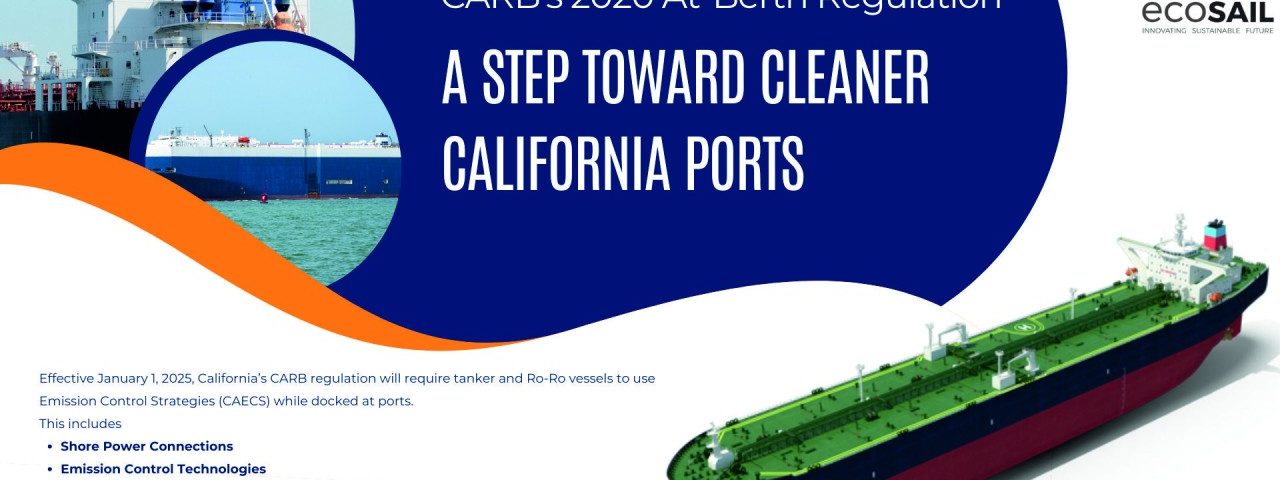
The 2020 CARB At-Berth Regulation aims to reduce harmful emissions from oceangoing vessels while docked at California ports. It applies to tanker and roll-on/roll-off (Ro-Ro) vessels, with a deadline of January 1, 2025.
Emissions Concerns: Vessels emit pollutants like NOx, PM, and SOx, especially when engines are running at berth, which affects the health of port workers and nearby communities.
Expansion of the Regulation: Initially targeting container, cruise, and refrigerated cargo vessels, the regulation now includes tankers and Ro-Ro vessels, extending its impact on air quality in California's port regions.
CARB Approved Emission Control Strategies (CAECS):
- Shore Power Connections: Vessels connect to the local power grid to turn off their engines.
- Alternative Emission Control Technologies: Includes scrubbers and advanced filtration systems.
- Hybrid and Battery-Powered Systems: Reduce emissions while at berth.
Key Requirements: Vessels must use CARB-certified emission control strategies by January 1, 2025. Continuous compliance, monitoring, and reporting on emissions are required.
- Broader Environmental Impact:
- Health Benefits: Reduction in respiratory issues and heart diseases.
- Climate Change: Supports California’s climate goals by cutting greenhouse gases.
- Environmental Justice: Benefits communities near ports, often exposed to high pollution levels.
Industry Challenges and Opportunities:
- Financial Investment: Significant costs for retrofitting vessels and ports, but necessary for sustainability.
- Innovation: Encourages new partnerships and advancements in emission-reduction technologies.
- Sustainability: Compliance boosts companies’ environmental credentials.
- Looking Forward: California’s ports are preparing for the 2025 deadline, and the success of the regulation could serve as a model for global port communities, promoting cleaner, sustainable environments.
The regulation reflects California’s leadership in environmental protection and sets the stage for cleaner ports and healthier communities.