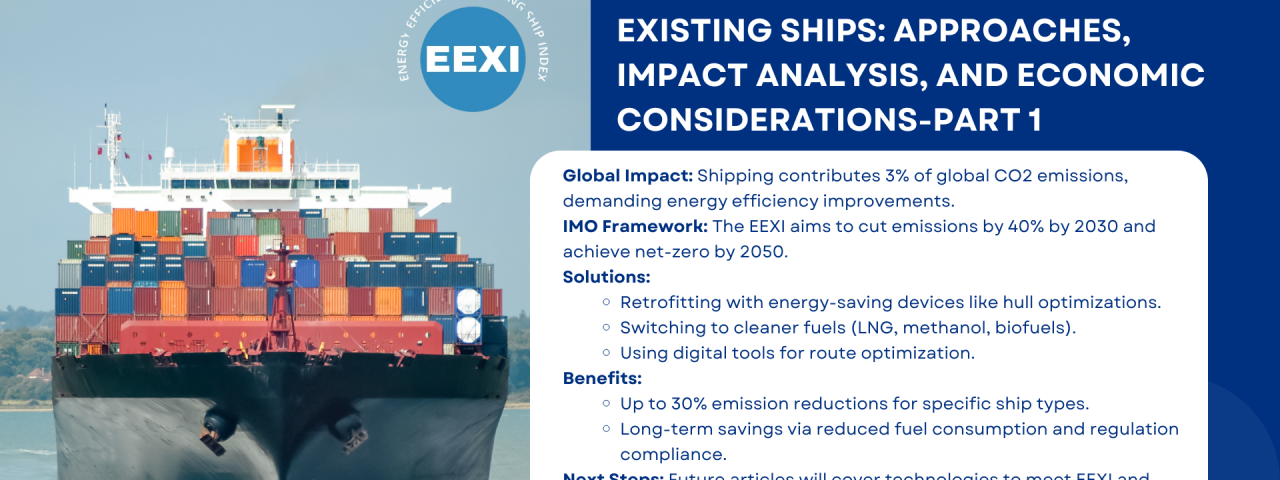
The shipping industry, which plays a crucial role in global trade, is responsible for about 3% of global CO2 emissions, significantly impacting climate change. As the world increasingly focuses on environmental sustainability, there is mounting pressure for the maritime industry to improve its energy efficiency. One of the key frameworks in this regard is the Energy Efficiency Existing Ship Index (EEXI), introduced by the International Maritime Organization (IMO). This article explores the methods for evaluating energy efficiency in existing ships, analyses the economic implications of energy-saving measures, and examines their potential for reducing CO2 emissions in the maritime sector, all in light of the IMO’s guidelines and recommendations.
In this series of articles, we will delve into specific technologies, retrofitting solutions, and operational practices that support compliance with EEXI standards and also help in enhancing CII rating. Upcoming instalments will highlight innovations such as hull optimization, energy-efficient propulsion systems, and alternative fuels, providing actionable insights for industry stakeholders aiming to balance environmental goals with economic feasibility.
Understanding the Energy Efficiency Existing Ship Index (EEXI)
The IMO’s Energy Efficiency Existing Ship Index (EEXI) is a global regulatory framework designed to address the energy efficiency of existing ships. This framework, which came into effect in 2023, aims to reduce the carbon intensity of the world’s fleet by ensuring that ships comply with energy efficiency standards. EEXI is a key component of the IMO’s broader strategy to cut the shipping industry's greenhouse gas emissions by 40% by 2030 and to reduce them to net-zero by 2050. The index measures how efficiently a ship uses energy relative to its capacity, taking into account factors like ship type, size, and operational profile.
To meet EEXI standards, vessels must meet specific energy efficiency targets that require a combination of technological upgrades and operational changes. The implementation of these measures is expected to significantly curb emissions and improve the environmental performance of the global fleet.
Methods for Evaluating Energy Efficiency in Existing Ships
- Data Collection and Classification
The first and most fundamental step in improving energy efficiency is the collection of accurate data regarding a ship’s design, operations, and emissions. Ships differ greatly in terms of size, type, and operating conditions, which means the efficiency measures must be customized accordingly. Essential data points include:
- Fuel consumption: Measures how much fuel the vessel consumes over a set period or distance.
- Engine performance: Assesses the efficiency and functionality of the engine, including its output and fuel consumption rates.
- Voyage data: This includes route planning, speed, and other operational parameters that influence overall fuel efficiency.
Once this data is collected, it is categorized based on factors like vessel types (e.g., bulk carriers, container ships, tankers) and operational profiles (e.g., long-haul versus short-haul routes). This categorization enables shipowners and operators to make informed decisions and identify areas for potential efficiency improvements.
- Marginal Abatement Cost (MAC) Analysis
A critical tool used to evaluate the cost-effectiveness of energy-saving measures is the Marginal Abatement Cost (MAC) analysis. This method assesses the cost of reducing CO2 emissions by a specific amount (e.g., per ton of CO2) by implementing various technologies or operational strategies.
The MAC method allows stakeholders to identify the most cost-effective measures to reduce emissions, such as:
- Engine Power Limitation (EPL): By reducing the maximum engine power, ships consume less fuel, thereby improving energy efficiency. This is particularly effective for vessels operating at lower speeds.
- Hull Modifications: Implementing hull fairing or coating technologies to reduce drag and improve fuel efficiency.
- Energy-Saving Technologies: Retrofitting ships with technologies such as propeller boss cap fins and rudder bulbs that can reduce fuel consumption.
- Alternative Fuels: Transitioning to low-carbon fuels such as LNG, methanol, or biofuels, which have a lower environmental impact compared to traditional fuels.
- Digital Solutions: The use of advanced voyage optimization systems that leverage real-time data and analytics to reduce fuel consumption by optimizing routes and speeds.
Formula for MAC Calculation:
The Marginal Abatement Cost (MAC) is calculated by comparing the cost of implementing a specific technology with the amount of CO2 emissions it reduces. The formula is as follows:
MAC=Cost of technology/CO2 reduction per unit
This helps in prioritizing energy-saving measures that are cost-effective and provide the highest return on investment in terms of emissions reduction.
Economic Analysis of Energy Efficiency Measures
- Cost of Implementation
Integrating energy-saving technologies requires an upfront investment, which can vary depending on the technology being implemented. The economic analysis of these investments considers several factors:
- Capital Costs: The initial costs associated with retrofitting ships or installing new technologies. For instance, retrofitting a ship with energy-saving devices or alternative fuel systems might require significant capital expenditure.
- Operational Costs: Ongoing costs, including changes in fuel consumption, maintenance, and staff training. These costs may increase initially but can decrease over time as operational efficiency improves.
- Discount Rates: The time value of money is accounted for using discount rates, which are used to evaluate long-term investments and their future economic viability.
- Fuel Price Projections: The cost-effectiveness of alternative fuels or technologies is also influenced by future fuel price projections. If fuel prices rise significantly, technologies that reduce fuel consumption will become more cost-effective over time.
The Cost Calculation Formula includes the consideration of the capital investment required, operational costs over the technology's lifespan, and the anticipated fuel savings.
- Feasibility of Technologies
Technological feasibility is an essential component in determining the economic viability of energy-saving measures. Factors that influence feasibility include:
- Retrofit Complexity: The ease with which new technologies can be integrated into existing ships without causing significant operational downtime.
- Compatibility: Ensuring that the new technology is compatible with existing ship systems, including propulsion and fuel systems.
- Operational Impact: Evaluating how changes might affect ship performance, including speed, cargo capacity, and the ability to meet operational requirements.
For example, integrating alternative fuel systems like LNG or biofuels may require significant modifications to the ship’s engine and fuel systems, but these investments may offer substantial long-term fuel savings.
Impact of Energy Efficiency Measures
- CO2 Emission Reduction Potential
The implementation of energy efficiency technologies and operational changes across the global fleet has the potential to significantly reduce CO2 emissions. According to the IMO’s studies:
- The adoption of energy-saving technologies and operational improvements could reduce emissions by up to 30% for specific vessel types.
- The use of alternative fuels and hybrid power systems (combining traditional fuel with renewable energy sources) further enhances the reduction potential.
For example, ships using LNG as an alternative to conventional marine fuels can reduce CO2 emissions by as much as 20%. The IMO estimates that by implementing these technologies, the shipping industry could contribute to meeting global climate goals.
- Cost-Effectiveness of CO2 Reduction
The cost of reducing CO2 emissions varies depending on the specific measures adopted. For example:
- Engine Power Limitation (EPL) and voyage optimization are among the most cost-effective methods to reduce emissions, with low costs per ton of CO2 reduced.
- More advanced retrofits, such as hull modifications or alternative fuel systems, may involve higher initial costs but offer significant long-term savings through reduced fuel consumption.
- Emissions Reduction Targets for 2030 and 2050
To meet the IMO’s emission reduction targets, the global fleet must reduce CO2 emissions by 40% by 2030 and move toward net-zero emissions by 2050. This will require the widespread adoption of energy-efficient technologies, changes in operational practices, and the transition to cleaner fuels. It is estimated that the cost of achieving these reductions will be outweighed by the long-term economic benefits, including lower fuel costs and compliance with environmental regulations.
Conclusion
Advancing the energy efficiency of existing ships is a pivotal step toward decarbonizing the maritime industry. By adopting data-driven evaluation methods, cost-effective technologies, and comprehensive economic analyses, the sector can achieve substantial reductions in CO2 emissions while maintaining economic viability. However, meeting the IMO’s ambitious emission reduction targets will require collaborative efforts from shipowners, policymakers, and technology providers. Through coordinated investment in energy-saving technologies and operational practices, the shipping industry can contribute significantly to global sustainability goals, ensuring a cleaner and more sustainable future for global shipping.
Stay tuned as we continue to shed light on the transformative potential of energy efficiency measures in the shipping industry and their critical role in achieving a sustainable future for global maritime operations in our upcoming articles.